A dinner party and design workshop for co-creating the home, and what the people around the table turned out to want.
Starting my own business allowed me to put into practice all I had learned about human-centered design. As the sole developer of the product from a technical perspective, and the only person responsible for business development and marketing or sales, I could make insights about consumer pain points a reality at every touch point with the brand. This extended beyond consumers, to the small workshops and independent designers that would provide products to them and to investors and potential employees themselves.
I hosted a dinner for consumers and creators where we talked about relationships with their domestic spaces, and hosted wine and beer tutorials to help facilitate a sense of how craft became product and reached consumers from their expectations or requirements. The following are slides from a debrief on the workshop.
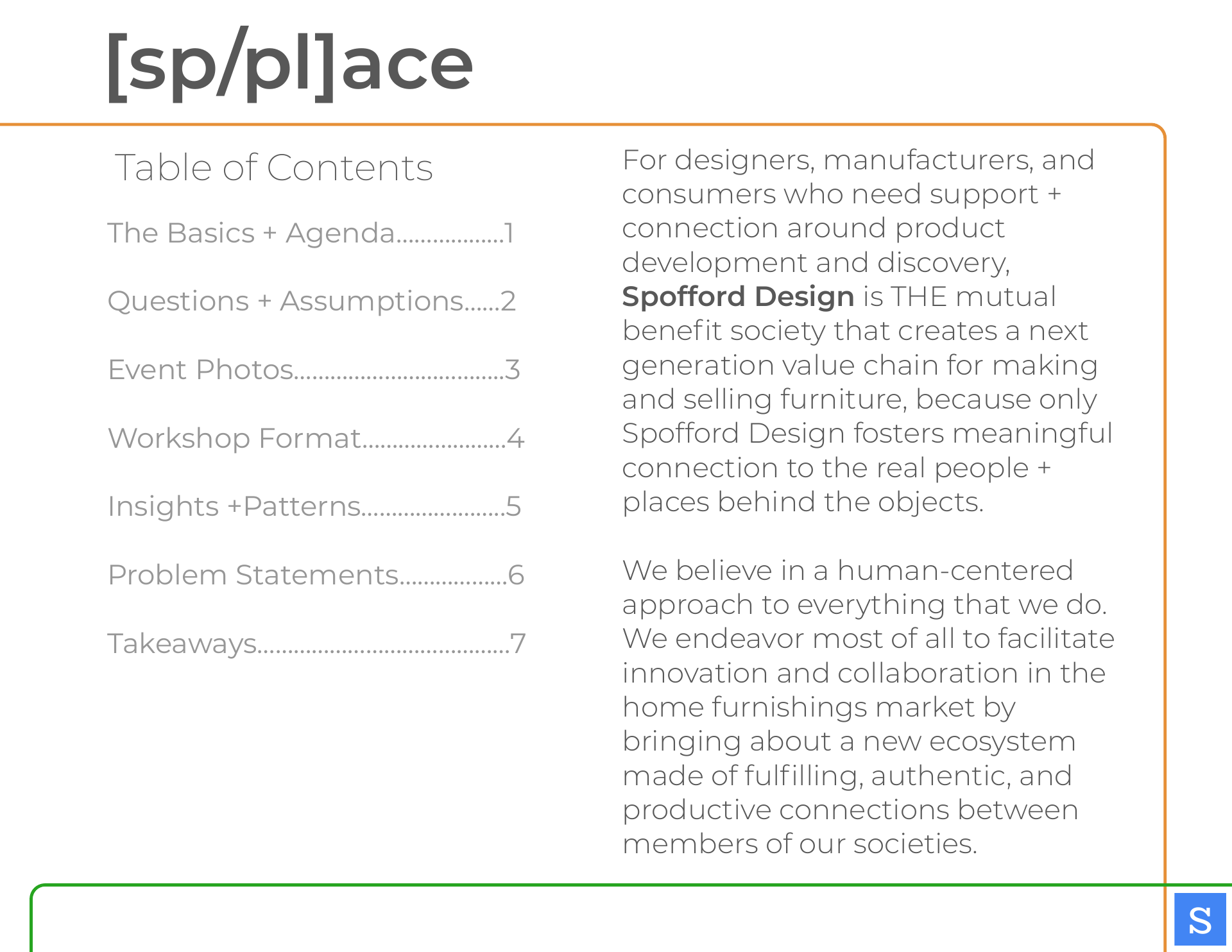
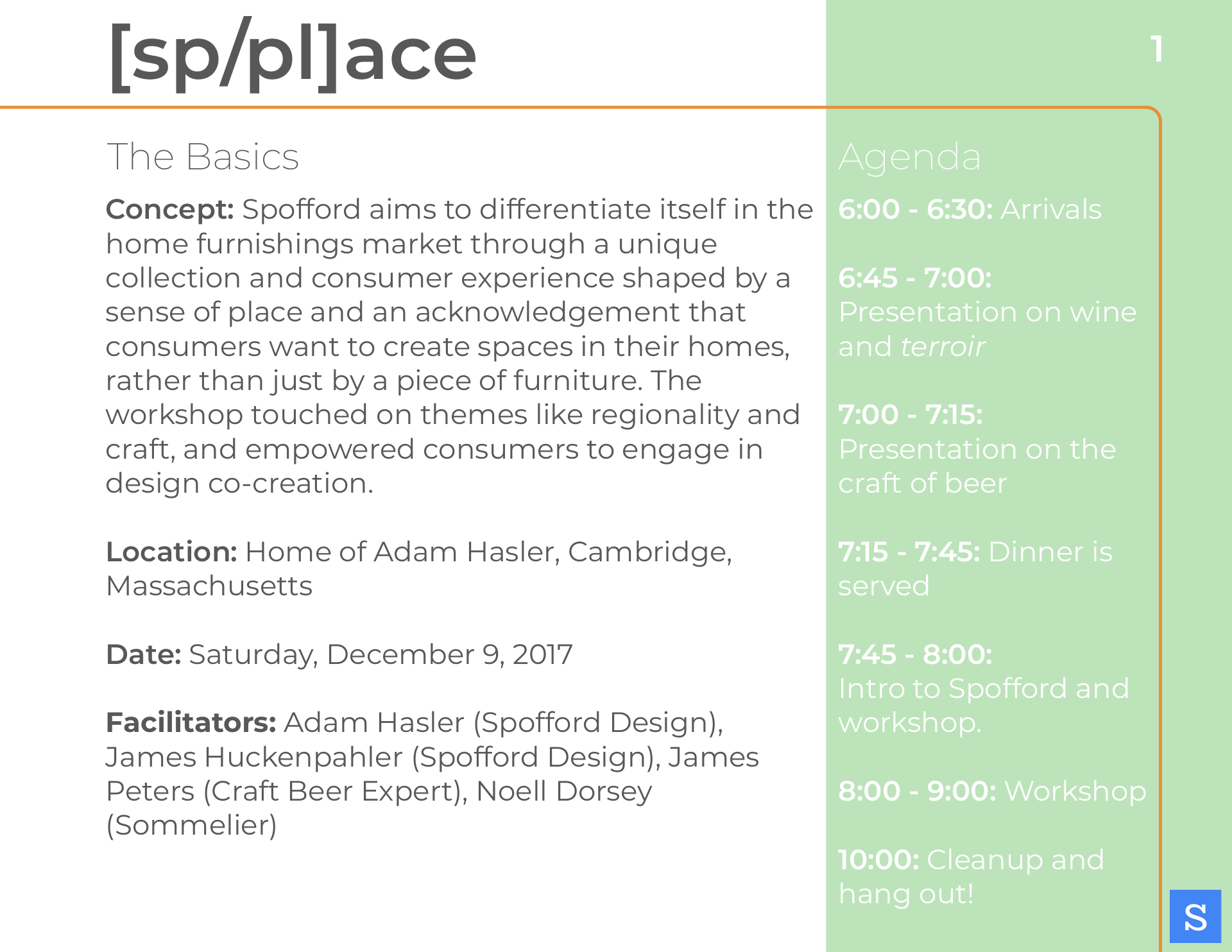
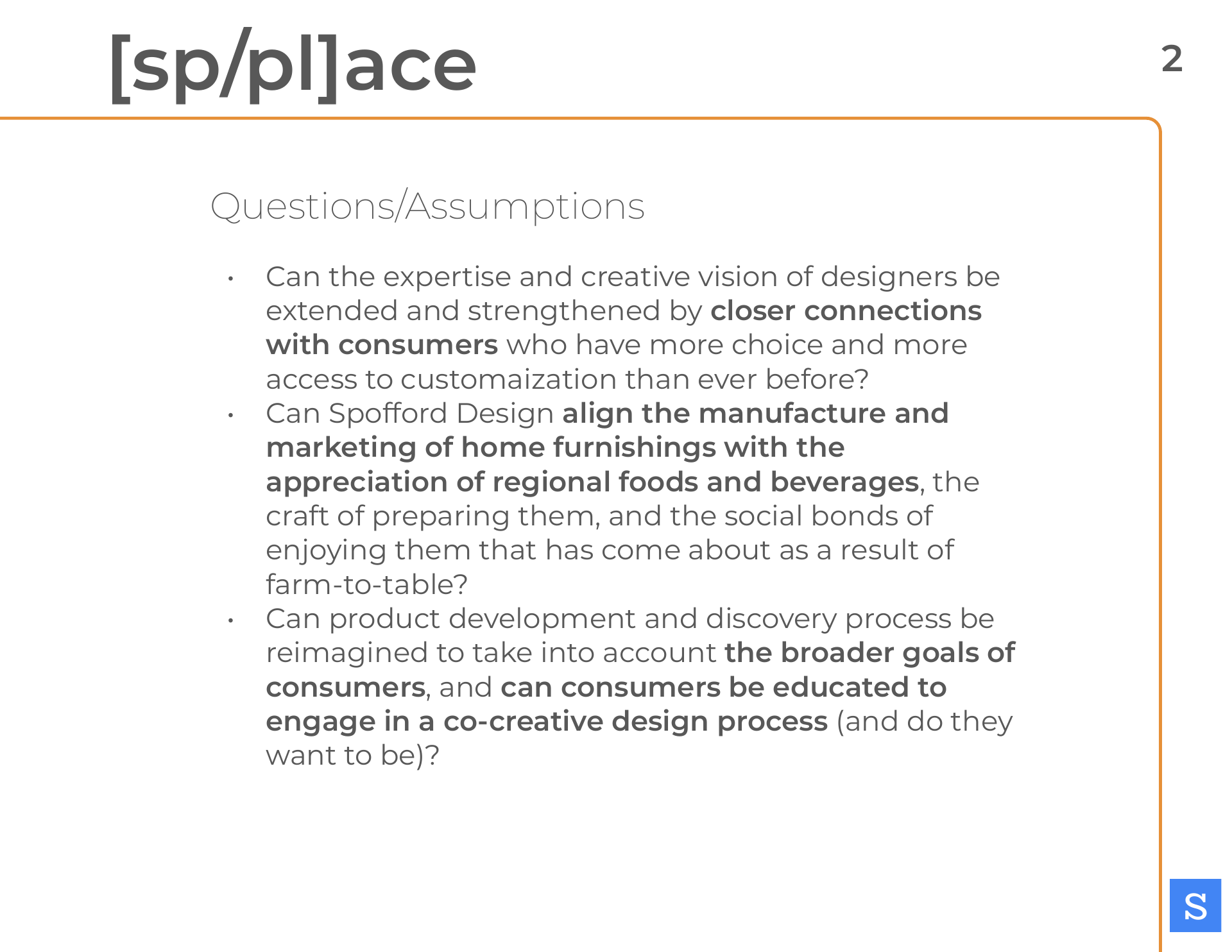
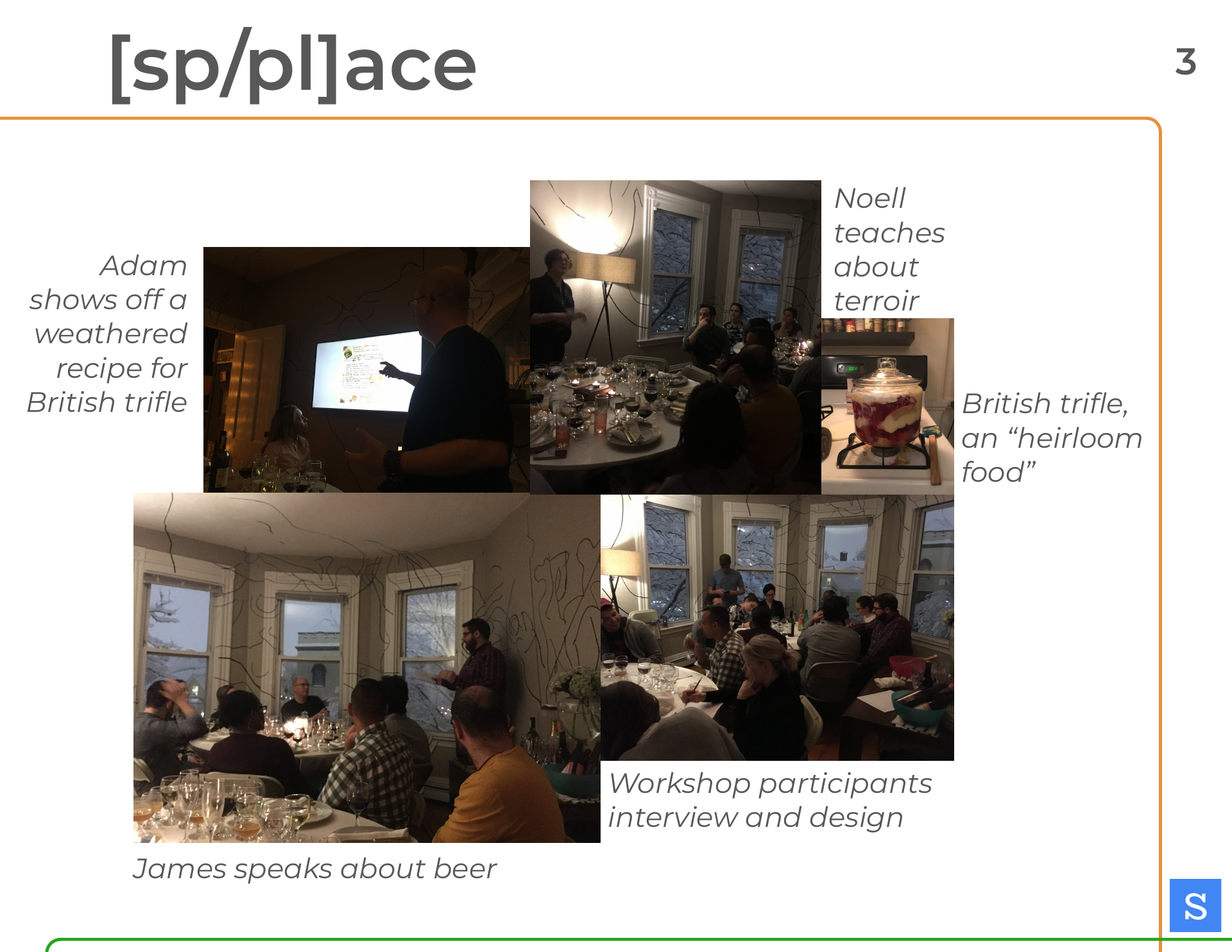
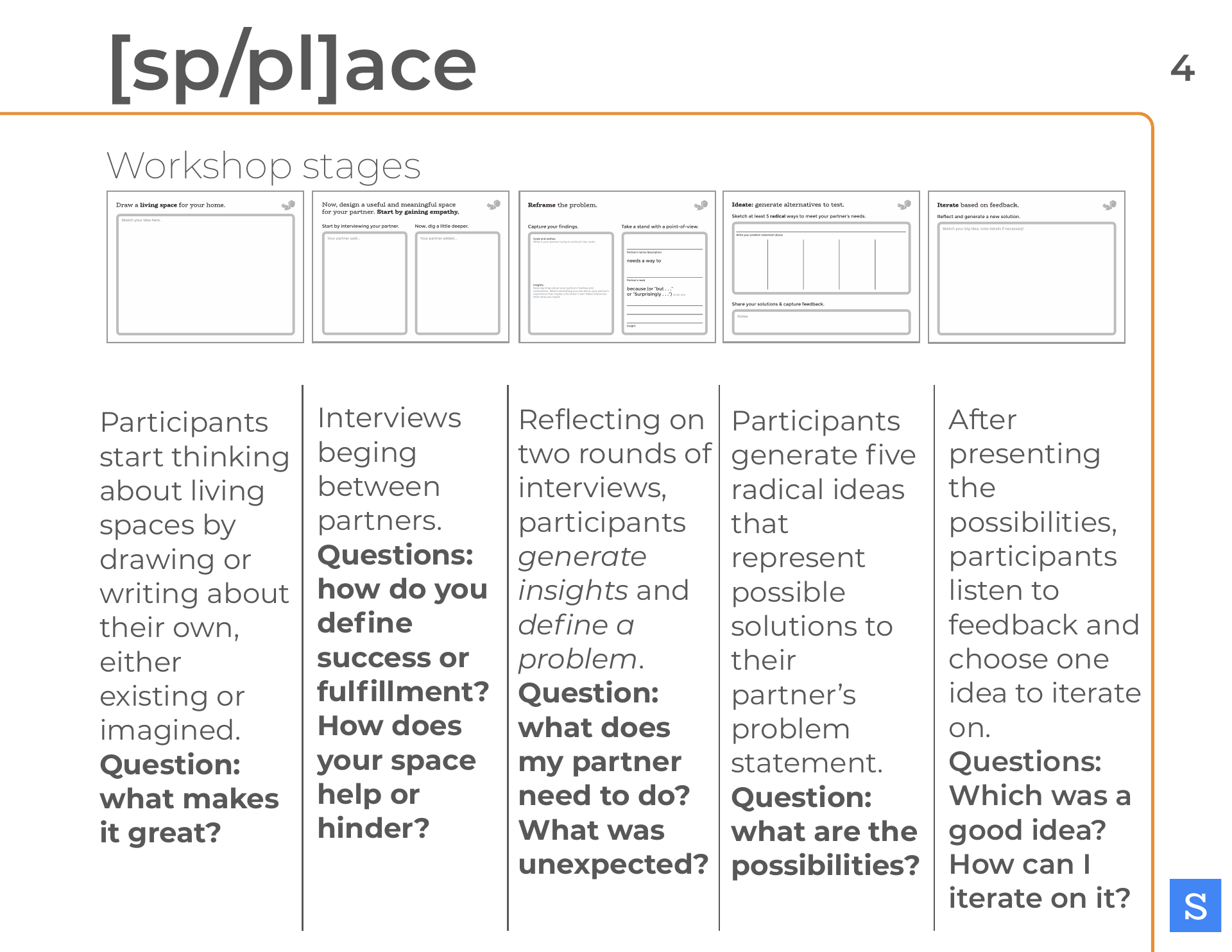
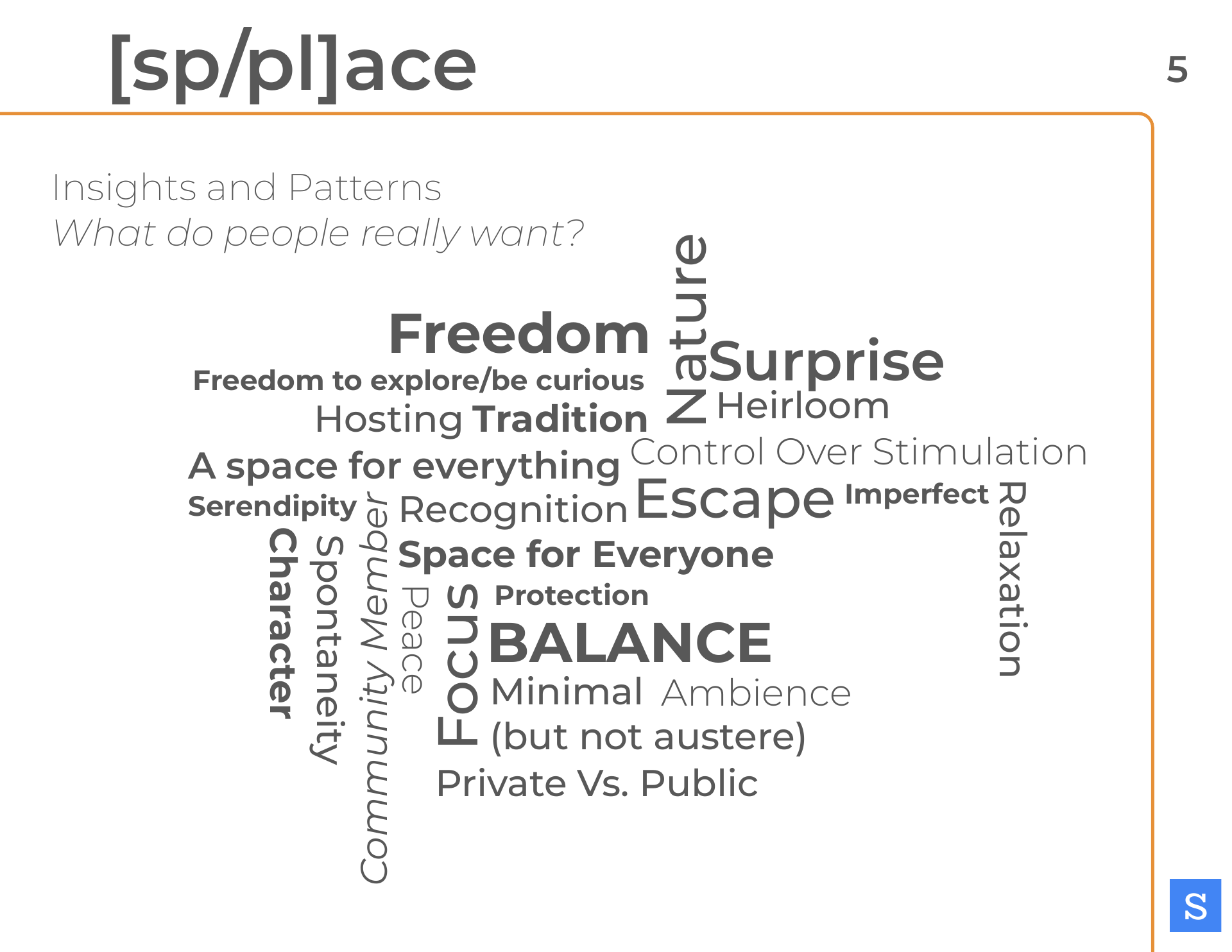
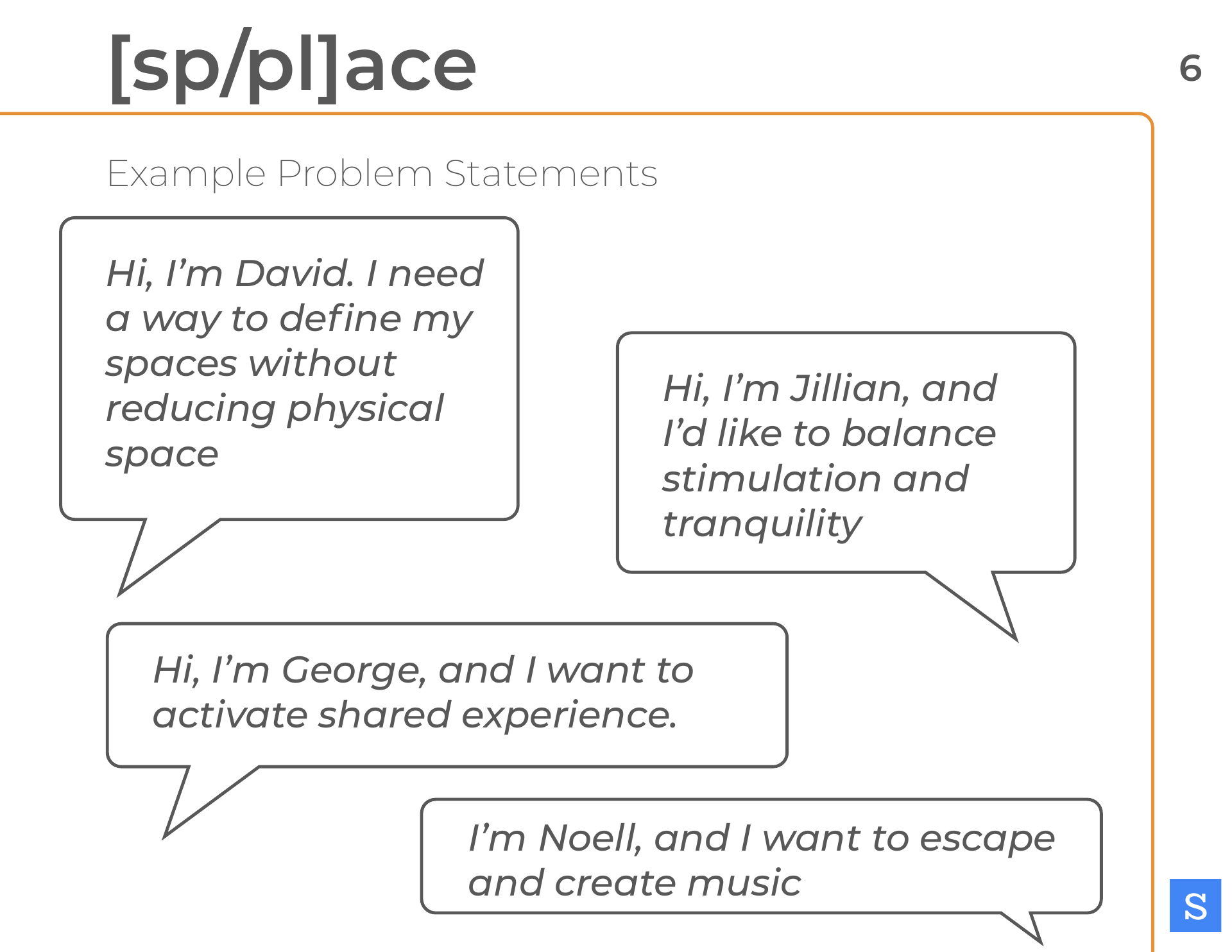
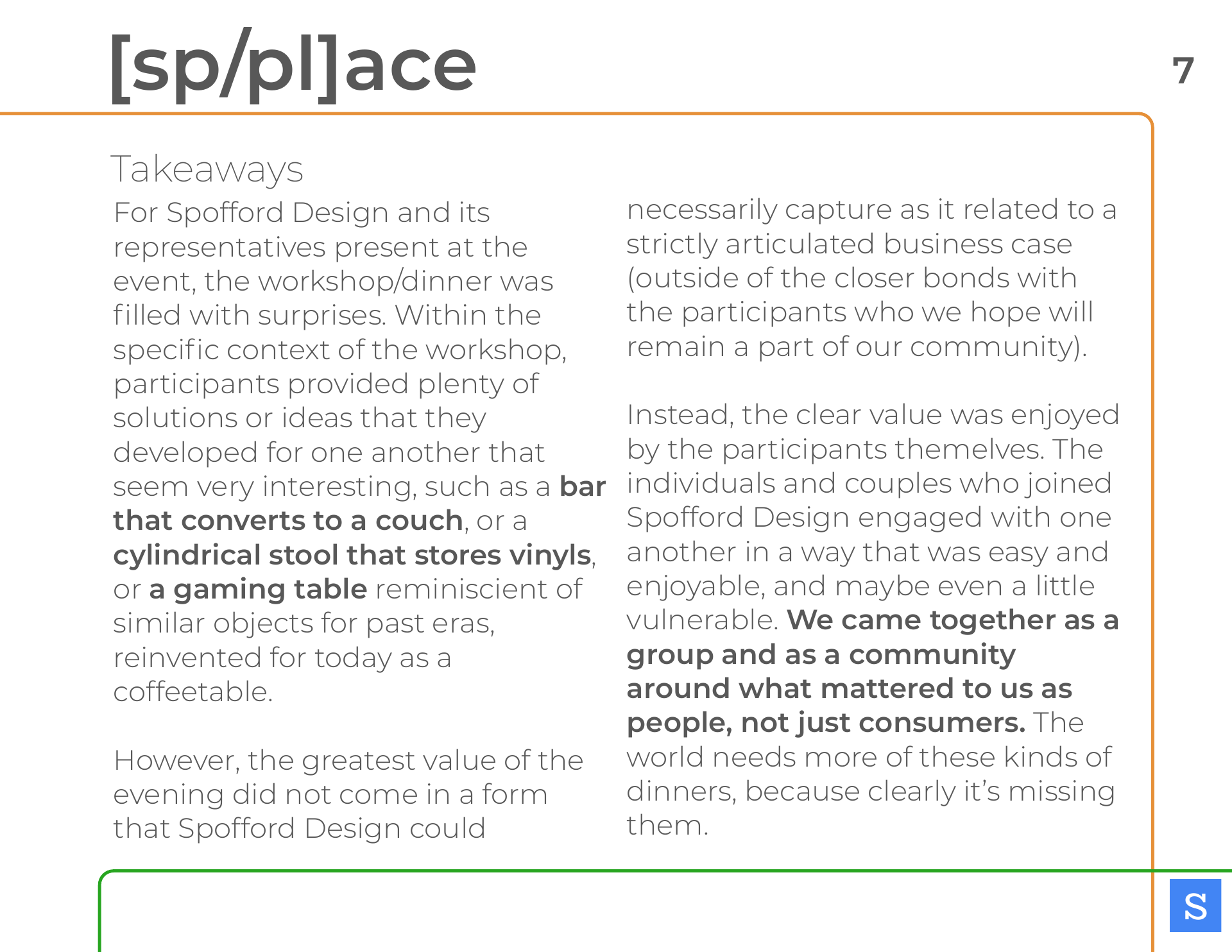
Fig. 1. Title slide. A dinner party and design workshop for co-creating the home, run by Spofford Design on December 9, 2017.Fig. 2. Contents and positioning. The deck opens with who Spofford served, designers, manufacturers and consumers, and with the claim that the company existed to connect people to the makers and places behind the objects.Fig. 3. The brief and the running order. Arrivals at six, a talk on wine and terroir, a talk on the craft of beer, dinner, then an hour of structured workshop. A sommelier and a craft beer expert facilitated alongside the two of us from Spofford.Fig. 4. The three questions the evening was built to test. Whether closer contact with consumers strengthens a designer's work, whether furniture can borrow the regional and craft framing that farm-to-table gave food, and whether consumers want to co-create at all.Fig. 5. The evening itself. Presentations on terroir and on the craft of beer, dinner, then participants interviewing and designing for one another. The trifle sat on the table as an heirloom food, the same argument about provenance applied to dessert.Fig. 6. The five stages. Draw your own living space, interview a partner twice, reframe what you heard into a problem statement, generate five radical solutions, then iterate on the one your partner picked. Each stage carries the question it asked.Fig. 7. What people said they wanted, gathered across the room. Balance, freedom, escape and control over stimulation recurred, alongside surprise, serendipity, and a wish for space that accommodates everyone.Fig. 8. Problem statements participants wrote for each other, in the first person. Defining space without giving up floor area, balancing stimulation against tranquility, activating shared experience, and escaping to make music.Fig. 9. Takeaways. Participants invented a bar that converts to a couch, a cylindrical stool that stores vinyl, and a gaming table reworked as a coffee table. The honest conclusion was that the evening's clearest value landed with the participants rather than in anything Spofford could put in a business case.Fig. 10. Back cover. The debrief went to Spofford Design on February 8, 2018, two months after the dinner.
I have led several such workshops as I put human-centered design into place in various organizations. Workshop facilitation and design has since become one of my favorite things to do as well as one of my greatest strengths.